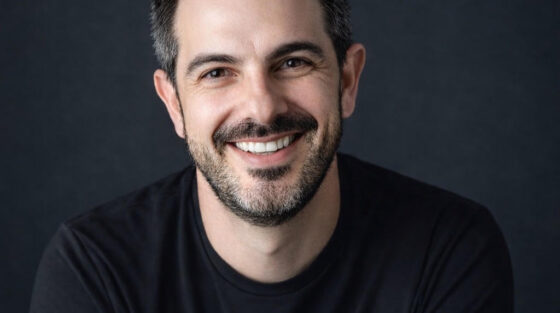
Getting to Know Brandon Farrow, Upper School Math Faculty
 Where Math Becomes a Way of Thinking
 Where Math Becomes a Way of Thinking
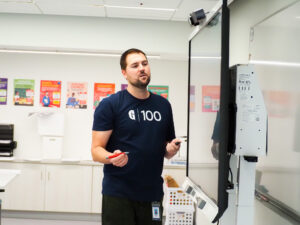
For Brandon Farrow, the most important thing students can learn in math class isn’t an equation. It’s what to do when they don’t immediately know the answer.
“Math courses aren’t just about learning math,” he said. “They’re about developing critical thinking skills.”
That belief has followed Farrow throughout his career. He began tutoring at 17 through his family’s tutoring business, drawn to math and science because problems could be both concrete and creative: there may be one solution, but many ways to reach it. Over 27 years as an SAT/ACT tutor and 12 years in education, he has taught everything from Math and English to logical reasoning, once using the Rubik’s Cube to teach ninth graders how to approach a problem from different angles.
Now, as a new member of Gulliver’s Upper School Math Department, Farrow is bringing that same spirit of experimentation to a learning environment designed for it.
The Courage to Try
Within his first few days at Gulliver, Farrow noticed something about his students: they wanted to know everything, immediately.
“I’ll be in the middle of showing students the first example problem, and I’m met with a barrage of questions,” he said.
He loves the curiosity. But he also wants students to become comfortable not knowing.
His message is simple: trust the process.
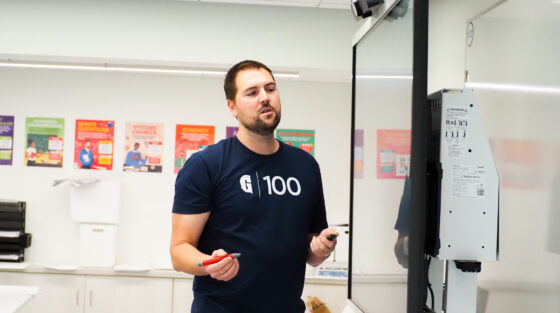
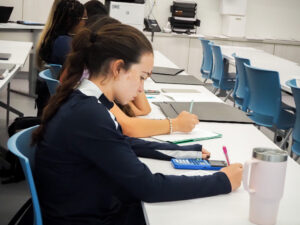 Farrow deliberately leaves room for students to wrestle with a problem, test an approach, make a mistake, and figure out what comes next. In “Show What You Know,” students head to the board immediately after learning a concept. They don’t earn credit for getting the problem right. They earn it for having the courage to try.
The exercise gives Farrow real-time insight into misconceptions while giving students something more important: evidence that they can work through uncertainty.
That combination of challenge, curiosity, reflection, and growth is embedded throughout the Gulliver student experience. Students are expected to tackle difficult questions, explore different approaches, learn from feedback, and keep improving, developing the confidence to take intellectual risks rather than simply chase the right answer.
And in a STEAM classroom, those habits matter far beyond mathematics.
Farrow regularly connects Algebra and Pre-Calculus to fields his students may one day pursue, including engineering, computer science, finance, economics, and music production. The goal is not simply to know how to solve for x, but to build the reasoning students will use to solve problems in a world that continues to change.
Artificial intelligence makes that distinction even more important.
Farrow embraces AI as a learning tool and encourages students to use it to ask questions and deepen their understanding. But access to instant answers, he argues, makes independent thinking more valuable, not less.
“A strong logical and critical foundation is needed in order to discern facts from misinformation and to make truly informed decisions in our new age of technology,” he said.
That philosophy reflects the kind of STEAM learning happening across Gulliver: interdisciplinary, applied, connected to the real world, and strengthened by technology without allowing technology to replace human thinking. Gulliver’s investments in advanced learning environments, instructional innovation, and exceptional educators create the conditions for students to move beyond consuming knowledge to questioning, experimenting, designing, and solving.
 A School That Keeps Asking, “What’s Next?”
 A School That Keeps Asking, “What’s Next?”
That mindset is also what drew Farrow to Gulliver.
“I love that Gulliver is a school that is never complacent,” he said. “As times change, the world changes, and students and their mindsets change. Therefore, Gulliver has to grow and change as well.”
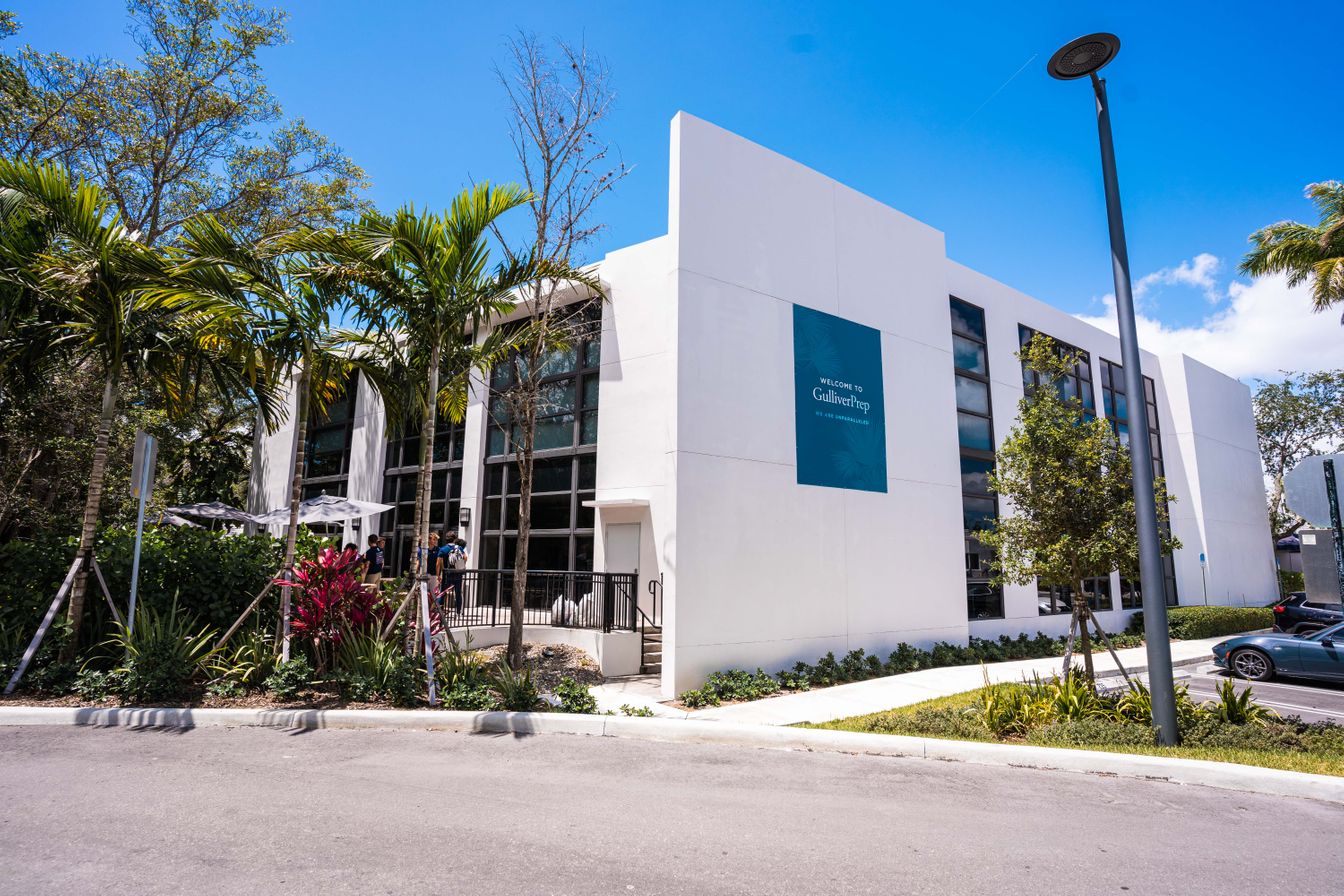
He sees that commitment in the transformation of campus, in the resources available to faculty, and in a Math Department where colleagues continually exchange ideas and rethink how students learn.
For Farrow, innovation doesn’t have to mean the newest piece of technology. Sometimes it means changing how students demonstrate mastery, using Smart Board tools to visualize a problem, experimenting with calculator strategies, or reconsidering traditional homework so teachers have a clearer picture of what students actually understand.
It is one reason Gulliver invests as intentionally in its educators as it does in its programs and spaces. Outstanding teachers turn those resources into experiences that challenge students to think more deeply, take meaningful risks, and discover what they’re capable of.
Farrow believes in that investment enough that one of his first decisions as a Gulliver employee was to become a donor himself, supporting the Annual Fund and the opportunities philanthropy makes possible for students.
“To every donor supporting our math and STEM initiatives, thank you for turning visionary education into an everyday reality for our students,” he said.
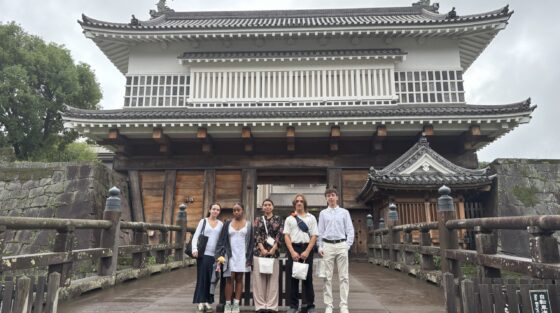
Outside the classroom, Farrow’s curiosity hardly switches off. He’s learning Japanese after traveling to Japan on his honeymoon, memorizing the artists and titles of popular 1980s songs to improve his trivia game, playing golf, and maintaining an impressive collection of more than 100 pairs of shoes.
For someone who teaches students that there is rarely only one way to reach a solution, it seems fitting.
Because in Farrow’s classroom, the answer matters. But how students learn to think their way toward it matters even more.
Support Our Faculty:
Faculty like Brandon bring next-level teaching and learning to life, challenging students to think critically, take intellectual risks, and approach complex problems with confidence. When you support Gulliver, you invest directly in exceptional educators who make STEAM learning relevant, innovative, and connected to the world beyond the classroom. Your generosity gives our faculty the tools and opportunities to keep pushing what’s possible for every student—click here to donate.