Getting to Know Maite Martinez-Cid, Upper School Architecture Faculty
 Designing More Than Buildings: Where Curiosity Becomes Expertise
 Designing More Than Buildings: Where Curiosity Becomes Expertise
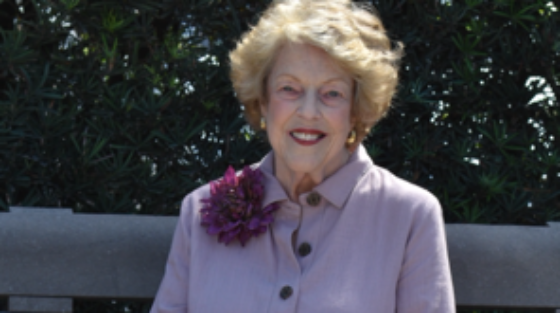
For Maite Martinez-Cid, architecture is about much more than buildings. It is a way of thinking, one that asks students to observe closely, question assumptions, work through complexity, and imagine what could be possible. After earning both her bachelor’s degree in Architecture and her master’s degree from the University of Miami, Martinez-Cid practiced professionally before returning to her alma mater to teach. There, she discovered that her passion for design extended naturally into education. “I found that I loved not only designing, but also helping young people discover their own creativity and problem-solving abilities,” she said. “I feel very fortunate to be able to introduce students to the world of architecture and to be part of their journey as they explore where their own interests and creativity can take them.”
At Gulliver, Martinez-Cid brings that professional perspective into the Architecture Signature Academic Program, a specialized, multi-year pathway that gives Upper School students the opportunity to explore architecture at a depth typically reserved for college. Gulliver’s Signature Academic Programs are designed to turn curiosity into expertise through applied learning and real-world experiences, with architecture joining pathways in biomedical sciences, engineering, business, diplomacy, and digital mass media. “What makes the program special is that students have the time and space to develop the way they think, not just learn how to use architectural tools,” Martinez-Cid said. “The ability to generate new ideas is already within all of us. It doesn’t have to be invented as much as it needs to be tapped into, practiced, and strengthened.”
Learning by Designing
 Learning by Designing
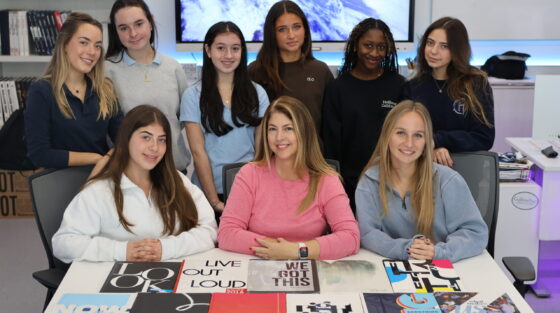
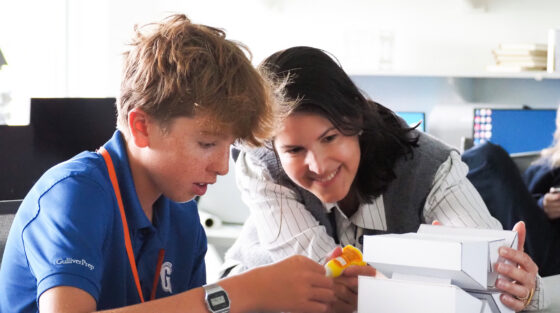
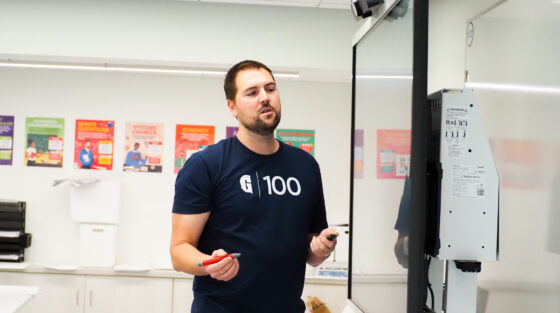
Martinez-Cid’s classroom operates much like a design studio. Students sketch, build models, create digital renderings, work in AutoCAD and Revit, and experiment with materials. Projects range from designing buildings and furniture to studying biomimicry or manipulating solid forms to understand light and space. But the finished product is only part of the learning. Students are expected to test ideas, accept feedback, rethink their approach, and try again. “Ideas evolve through experimentation, critical evaluation, and refinement,” Martinez-Cid said. “When something isn’t working, they learn to question it, rethink their approach, and develop a stronger solution.”
That process becomes even more meaningful when students apply it to authentic challenges. In the Eco Resort Suite project, for example, students analyze a site and its environmental conditions, consider the human experience of the space, and develop a design responsive to its surroundings. They follow many of the same steps a practicing architect would, moving from research and conceptual development through drawing, building, presenting, feedback, and refinement. “The goal is not simply to create something that is aesthetically pleasing, but to understand why a design belongs where it is and how it can contribute meaningfully to its surroundings,” she said. It is the kind of relevant learning central to Gulliver’s approach, connecting rigorous academics with applied skills and the world students will eventually enter.
 Discovering What They Are Capable Of
 Discovering What They Are Capable Of
Perhaps the most powerful part of the program is what happens when students begin to see themselves differently. Martinez-Cid has watched students enter her classroom convinced they are not creative, then become completely absorbed in an idea as they question, experiment, and discover what they can do. “The moments that stay with me most are the ones when I see that ‘aha’ moment awaken in a student,” she said. “There is something deeply rewarding about watching a student suddenly make a connection, see a possibility they had not seen before, or realize that they are capable of more than they thought.”
Those moments capture what Gulliver means by giving students the space to find their spark. They also reflect a broader understanding of what it means to thrive: students who stay curious, take on difficult work, continue improving, and develop greater confidence in themselves are better prepared for whatever comes next. “Creativity is not a gift bestowed on a select few,” Martinez-Cid said. “It can be awakened and developed in all students when they are given the freedom, encouragement, and intellectual space to explore.”
Preparing Students to Shape What Comes Next
 Preparing Students to Shape What Comes Next
As technology and artificial intelligence transform architecture and other industries, Martinez-Cid wants students to be fluent in new tools without becoming dependent on them. “AI can help you generate an idea, but it can’t replace the process of deciding whether that idea actually makes sense,” she said. Her emphasis remains on the human capabilities behind strong design: critical thinking, creativity, communication, and thoughtful decision-making.
Whether her students ultimately pursue architecture or take an entirely different path, Martinez-Cid hopes they leave her classroom seeing more possibilities than when they entered it. “They learn that the first solution is never the only solution, and that meaningful ideas are born of experimentation, reflection, and refinement,” she said. “I hope to help shape the way students see the world and understand their place within it.”
That is what makes programs like architecture distinctly Gulliver. Students have the opportunity to explore a sophisticated field while they are still discovering who they are, guided by faculty members who know when to challenge them and when to give them room to explore. The result is bigger than learning how to design a building. It is learning how to approach an uncertain future with curiosity, confidence, and the belief that they can help shape it.
Support Our Faculty:
Faculty like Maite bring next-level teaching and learning to life by giving students the space to explore ideas, think like designers, and turn curiosity into meaningful work. When you support Gulliver, you invest directly in exceptional educators who create distinctive, real-world learning experiences and prepare students to approach what comes next with creativity and confidence. Your generosity gives our faculty the tools and opportunities to continue expanding what’s possible for every student—click here to donate.