Seniors in Stem: Gulliver Prep Student Explores the Science of Sleep and Trauma Through Published Research
An international research collaboration gives Emma Steremberg ’27 the opportunity to explore neuroscience, contribute to a published paper, and discover a clearer direction for her future.
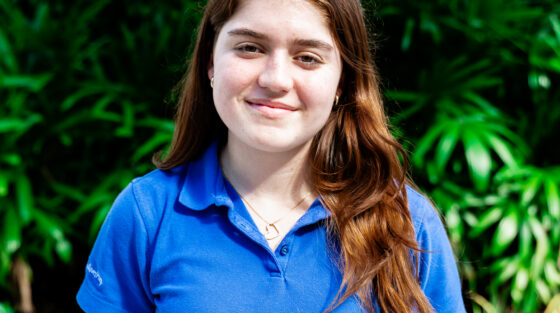
For Gulliver Preparatory School senior Emma Steremberg ’27, a question about something we all do every day led to an opportunity to become a published student researcher: Can sleep help people recover from psychological trauma?
Through an international research program, Emma collaborated virtually with students from around the world to investigate the relationship between sleep, post-traumatic stress disorder (PTSD), and emotional recovery. Their findings became part of a published research paper, marking an important milestone in Emma’s growing interest in neuroscience and psychology.
“We really wanted to figure out if sleep has a really big impact on recovery,” Emma explained.
Exploring the Connection Between Sleep and Trauma
Emma’s research focused on how sleep may help individuals process traumatic memories, particularly military veterans experiencing PTSD. Working with a group of approximately seven students, she examined existing scientific literature on the role of sleep in memory consolidation and emotional processing.
“So the more that you sleep, the more your brain is able to consolidate those memories and understand the emotions you felt,” she explained. The group investigated how restorative sleep might support emotional recovery alongside other forms of treatment, including psychotherapy. Their research also explored the importance of sleep cycles and the challenges individuals with PTSD may face in getting consistent, uninterrupted rest.
The broader collaboration extended into another area of psychological research: the relationship between childhood trauma and parent-child relationships. While Emma’s group focused on sleep and PTSD, another team examined how childhood experiences can influence future generations and how cycles of trauma might be interrupted.
For Emma, the project offered a new perspective on how scientific inquiry can help us better understand complex challenges affecting people’s lives.
An International Collaboration Built on Curiosity
Emma’s interest in research grew after attending a pre-college program at Oxford, where she explored subjects related to medicine and learned from a Ph.D. student. Inspired by that experience, she pursued an online research opportunity that connected students ages 16 to 18 from countries including India, the United Arab Emirates, and the United States. The students met virtually each week with a published research mentor who reviewed their work, challenged their thinking, and guided them through the process of developing a research paper. Rather than following a prescribed assignment, students helped determine the direction of their research and took responsibility for moving their work forward.
“It was really nice because it was very independent,” Emma shared. “It wasn’t like a class setting where you’re told what to do and you just do it and then you turn something in.” The experience required Emma to manage her time, collaborate across borders, and approach unfamiliar material with curiosity and persistence. It also gave her firsthand experience with the kind of independent inquiry she had begun developing through Gulliver’s International Baccalaureate (IB) program. As an IB student, Emma recognized similarities between the research process and the Extended Essay, an independent academic project for which she receives guidance from her psychology teacher. Both experiences emphasized the importance of asking meaningful questions, evaluating research, and refining ideas through mentorship.
From Research to Publication
After completing their research and writing, Emma and her collaborators submitted their paper to a journal for review. When they received news that their work had been accepted for publication, the accomplishment carried particular significance. “It was really nice to have also that validation and knowing that all the work that we had to put in paid off,” Emma said.
For a high school student, seeing months of independent work culminate in a published paper offered a sense of accomplishment that extended beyond a classroom grade. It was an opportunity to participate in a larger academic conversation and experience the process of scientific research from initial inquiry through publication. The experience also reinforced the importance of collaboration, constructive feedback, and the willingness to revisit and strengthen one’s work.
Discovering a Direction for the Future
Beyond the publication itself, Emma says the experience helped her better understand her academic interests as she prepares for college. Balancing research with her responsibilities as a Gulliver student strengthened her time-management skills, while exploring the intersection of neuroscience and psychology gave her greater confidence in the subjects she hopes to pursue.
“It’s nice to walk into my college applications or walk into college knowing I’m really interested in neuroscience and psychology,” she said. That clarity is perhaps one of the most meaningful outcomes of her experience. What began as an interest in medicine developed into an opportunity to explore a specialized field, collaborate with students around the world, and discover what genuinely excites her about learning. “I know that I like this, I’ve done research on this, I know how this works,” Emma shared.
As she looks toward college, Emma hopes to build on that foundation through additional coursework and research in neuroscience and psychology. Her published work represents both an academic accomplishment and an early step toward understanding where her interests may take her next.