From Gulliver to the Moon: Alumna Helps Power NASA’s Artemis II Mission

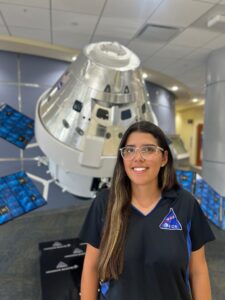 When NASA’s Artemis II mission completed its historic journey around the Moon, it marked a defining moment in human exploration – the farthest humans have traveled from Earth in more than 50 years. For Gulliver alumna Lauren Lugones ‘17, the milestone was deeply personal, as she saw years of her engineering work come to life to advance space exploration.
“Seeing hardware I worked on launching into space to take the crew around the Moon and back safely has definitely been one of my proudest moments,” said Lauren. “It was a mix of pride, awe and relief.”
Lauren is a Systems Integration and Test Engineer at Lockheed Martin, where she supported the development, testing, and launch of the Orion spacecraft for Artemis II. Her work is central to NASA’s return to deep space, helping ensure the systems that carry astronauts around the Moon operate with precision, reliability, and safety. She was the lead engineer for critical Orion crew hatches – the doors to the spacecraft – and separation mechanisms that ensure the crew remain safe during launch, while in deep space, and upon re-entry.
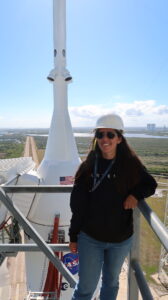 She’ll continue working on the build of vehicles for NASA’s Artemis III, IV, and V missions, which are targeted to land astronauts on the Moon in 2028 and lay the groundwork for future exploration beyond the Moon.
“Working on the Artemis program is incredibly meaningful to me since it’s the next chapter of human space exploration and something that will shape the future of how we explore beyond Earth,” she said.
How Gulliver Shaped Her Future
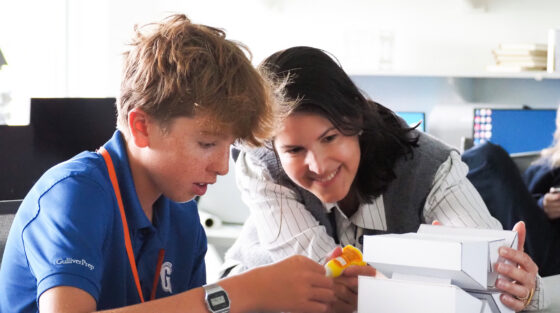
Lauren has always been drawn to space and engineering, but Gulliver helped her see that a career in aerospace engineering was more tangible than she ever imagined. At Gulliver, she immersed herself in the school’s FIRST Robotics program and engineering coursework, served as fabrication lead on robotics teams, and gained extensive hands-on experience designing, building, and testing real systems from the ground up.
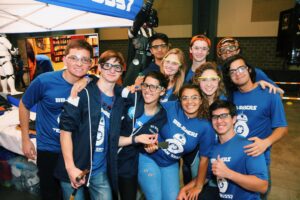
“One of the biggest things I learned was how to approach complex problems without getting overwhelmed. Whether it was a robotics challenge or a design project, I learned to break things down, iterate, and keep improving. That mindset is something I use every day in my career,” she said. “While I’ve always been interested in space, this hands-on experience at Gulliver made me realize I wanted to pursue something where I could contribute to impactful missions.”
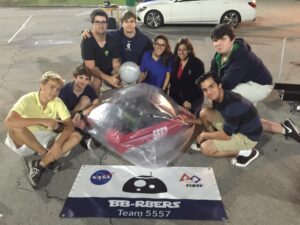 Looking back, she also credits her engineering teachers with creating a classroom culture that was rooted in experimentation, collaboration, and learning through failure. She appreciates how closely it mirrored real-world engineering, helping to build her confidence early on.
“Gulliver gave me both the technical foundation and the confidence to pursue engineering at a high level,” she said. “The emphasis on teamwork, leadership, and hands-on problem solving directly mirrors what I do now. It made the transition into my career feel much more natural.”
From Gulliver to the Moon, Lauren’s story is a reminder that the future of exploration is already being built – one system, one launch, and one student at a time.