From Miami’s Parks to the World’s Ecosystems: Nina Castro Alves ‘23

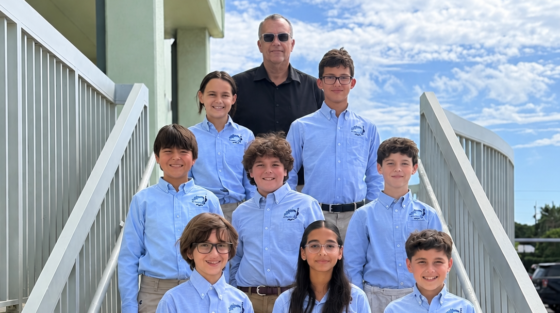
Growing up in Miami, Nina Castro Alves ‘23 loved being outdoors. But it was her International Baccalaureate Middle Years Programme (MYP) Community Project at Gulliver, working with TREEmendous Miami to remove invasive plants threatening native species, that turned her curiosity into action.
“My IB MYP project showed me that I could make real decisions to help, and it taught me about the problems our local plants face,” she said.
That experience sparked something much bigger. Nina went on to volunteer and work two summers at Montgomery Botanical Center near Gulliver, then collaborated with the National Oceanic and Atmospheric Administration (NOAA) during her senior year with guidance from Upper School Science Faculty Mr. Tohulka.
“What the IB MYP project gave me was confidence. That confidence led me to volunteer and work two summers at Montgomery Botanical Center right next to Gulliver Academy. Without it, I might not have taken on something larger and more technical.”
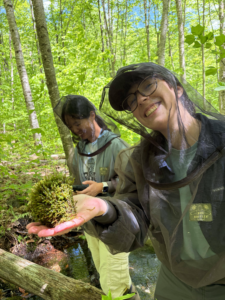
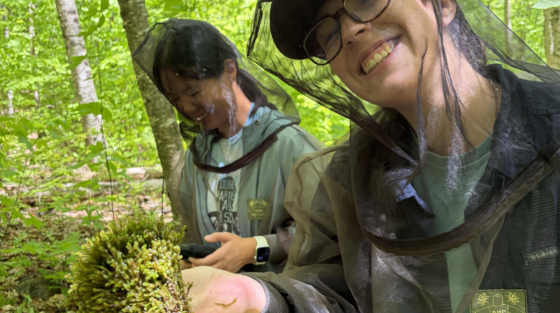
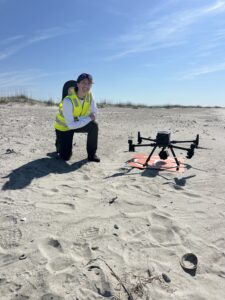
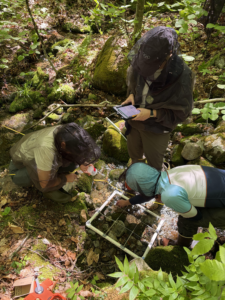
Today, Nina is a senior at Duke University pursuing a degree in environmental science, with research taking her from coastal ecosystems to mountain streams. As a lead field technician with the U.S. Forest Service and Hubbard Brook Experimental Forest in New Hampshire, she helped survey 50 streams to study aquatic mosses and their role in forest ecosystems. Her senior thesis explores how drones, laser scanning, and other remote-sensing technologies can map stream habitats. At Duke’s Marine Lab, she has also used drones to study coastal erosion, plant biodiversity, and shark and ray populations.
Through it all, she has discovered how scientific research can become a powerful tool for helping others. “I find joy in working with others towards a goal that helps those with little voice in our society, which in this case is nature,” she said.
Looking ahead, Nina hopes to pursue a PhD and a career combining environmental research, geospatial technology, conservation, and eventually teaching. Her ambition is to make complex scientific information accessible so communities can better understand and protect the places they call home.
“I think we all have a fundamental desire to help other people; humans are social creatures and we survive by working together,” said Nina. “ I also deeply care about the environment and I want more people to understand our connection to the world around us. I want to help us use our planet’s resources sustainably and efficiently, and use data to assess the health of our environment.”
Nina’s journey from student to alumna to environmental researcher is a reminder of how a single experience can inspire a lifelong sense of purpose. What began as a Middle School project has grown into work with the potential to make a difference far beyond it.
She encourages students after her to “try something you want to learn more about but don’t yet know much about. This is your chance to gain experience in something new. Invest in yourself and make the project fun, because that’s how you help the world best.”